|
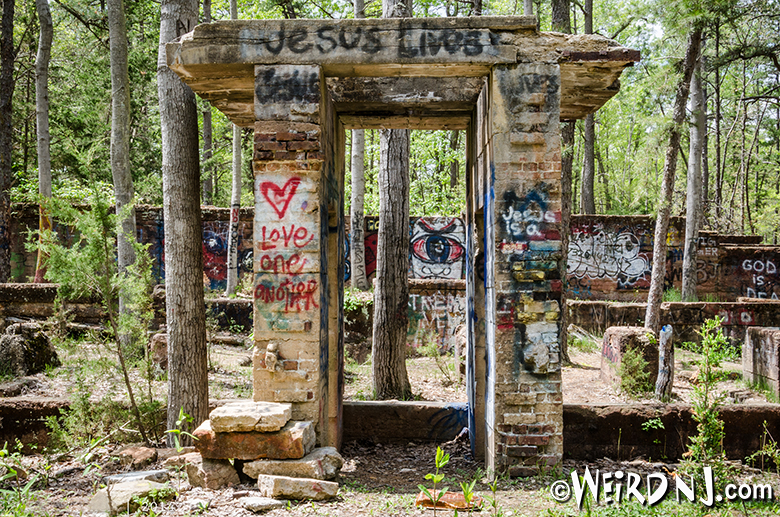
JUNGLE HABITAT: WILD AND ABANDONED IN NJ If there were a "Weird New Jersey Hall of Fame," Jungle Habitat would undoubtedly be one of the first sites listed among its prestigious ranks. Dozens of stories have been reported to us regarding the abandoned Warner Brothers safari theme park, ranging from sightings of wild animals inhabiting the woods of West Milford to first-hand accounts of explorations of the grounds upon which it once stood. Some of our readers share their recollections of JH: Jungle Habitat closed around 1976 I think. As the story goes from what I know, it was like a Great Adventure thing - You drove through and the animals roamed around and stuff. As I know it, the owner allegedly stole a whole bunch of money. So that he wouldn’t have to pay it back, he fled, letting loose all of the animals. One day while my mom was in the kitchen, she let out a scream. I ran over to her to see a huge Ostrich in our backyard! Other animals roamed the streets too I think, but I don't really remember. The strange thing is that everything is still there. It is so scary to drive up that road at night, and see the huge blue sign stare you down in the darkness. I heard all the cages are still there, and there are some other odd things. - Jessica F.
As kids, my brother and I went to Jungle Habitat before it was closed down due to a kid getting mauled by monkeys or something. The place was left abandoned – animals and all. I heard years later that a kangaroo family was found living there still. I’ve hiked through it, seeing the same things I once saw as a kid, but now all run down and grown over. The place is interesting, but for me very sad too because I hold fond memories in my heart for the park I had so many good times at. It remains in decay, uncared for and unresolved. It still freaks me out. - Brian P. As with most Weird NJ hotspots, we were compelled to ask ourselves: Why are there so many stories about this place? Why didn’t it simply go down in history as an unsuccessful business venture? Is just being abandoned enough to start a legend? The answer to these questions is that Jungle Habitat had been a strange place since the day its doors first opened. Research into its history shows that even at the height of its popularity, Jungle Habitat was the source of some incredibly strange stories. The first time Jungle Habitat made headlines occurred only months after its doors opened in the summer of 1972. An Israeli tourist named Abraham Levy was riding through the safari in a taxicab, when he decided to roll down the window to get a better look at some of the animals roaming around. Two lions attacked the car and mauled the 26 year old tourist, causing not only lacerations to his face and shoulder, but a ton of negative publicity to be brought upon the park. The melee died down shortly however, when Levy publicly took responsibility for the incident. By year’s end however, local residents were up in arms again. This time, the outcry was due to widespread reports of animals escaping into mountains of West Milford. Besides sightings of harmless animals like peacocks, there were rumors spreading about dangerous animals, such as a pack of wolves and a lion, being sighted along local roads. Some of these fears were actually well founded, as animals such as baboons and an emu did make successful breakouts. Some rumors we’ve heard, like those alleging that the animals were left to fend for themselves or die after the park finally closed, might have their basis in gruesome facts that were subsequently revealed. Right after the park closed in October of 1976, it was determined that some of the animals were too sick to be sold to other zoos. After the animals died, their carcasses were left outside and unprotected from the elements, and scavengers. The pile of animals grew until thirty bodies, including that of an elephant, a bison, a camel, and some zebras, were all left lying around until the following April, when they were finally buried. The six months that they were left exposed was a severe violation of state laws, which stated that any animal should be buried within forty eight hours of its death. Despite this violation, Warner Brothers, the owners of the park, were not sanctioned. Jungle Habitat is gone now, but not forgotten. With our memories being shaped by continuing local lore of wild escaped animals roaming the wooded hills of West Milford, how could it be? 
|